When does bù
become bú?
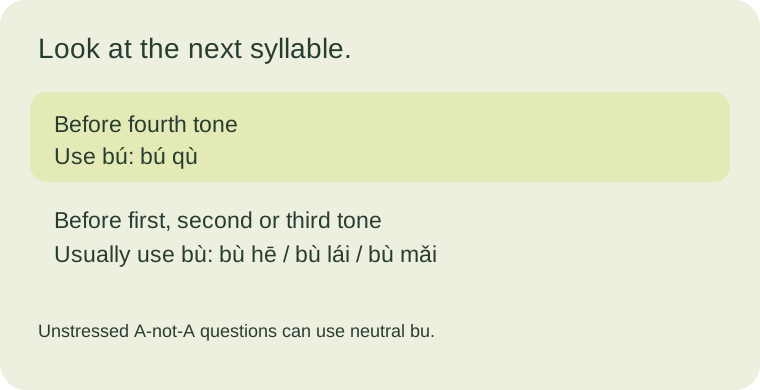
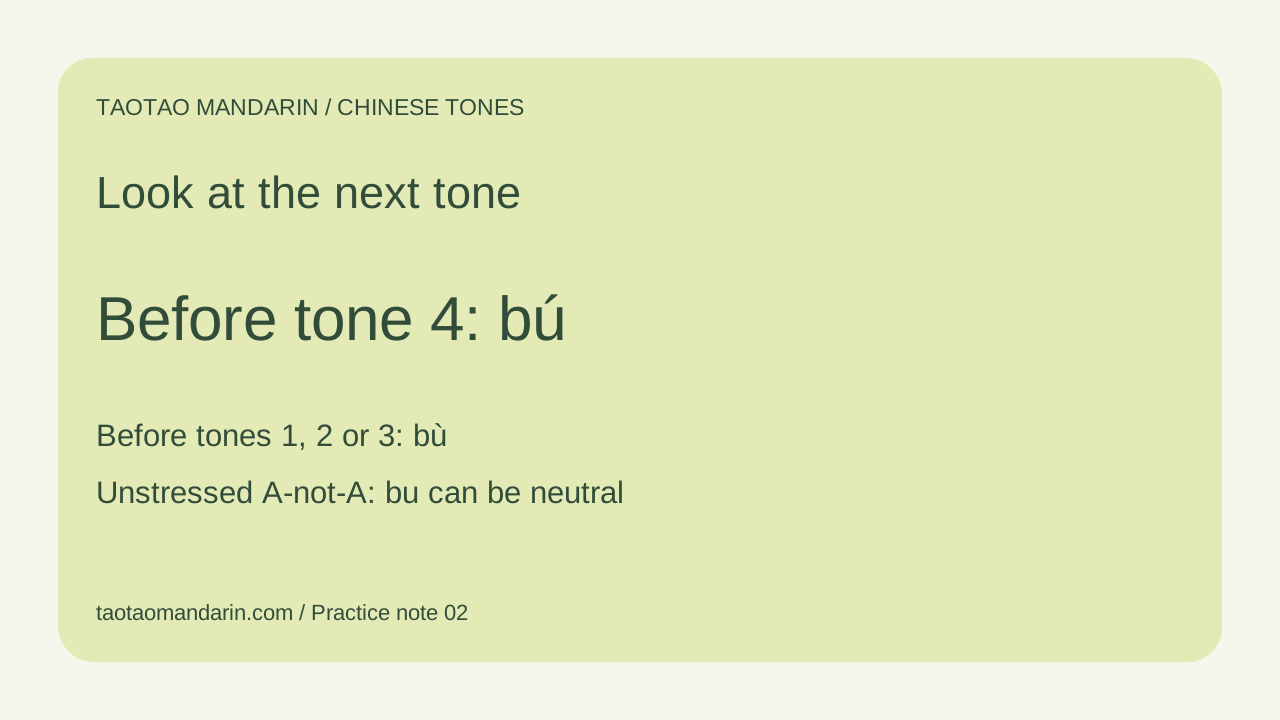
In ordinary connected speech, 不 is pronounced bú before a fourth-tone syllable: 不去 is bú qù. Before first, second or third tone, use bù. In some unstressed A-not-A questions, 不 can be neutral. Start with the next syllable, rather than memorizing every phrase separately.
Which sound comes next?
The dictionary form is bù. For the basic connected-speech rule, look at the tone immediately after 不: a following fourth tone makes it bú. Otherwise, the usual form is bù. The special unstressed question pattern is a separate case.
| Phrase | Spoken reading | What to notice |
|---|---|---|
| 不喝 — not drink | bù hē | The next syllable has first tone. |
| 不来 — not come | bù lái | The next syllable has second tone. |
| 不买 — not buy | bù mǎi | The next syllable has third tone. |
| 不去 — not go | bú qù | The next syllable has fourth tone. |
In an unstressed question such as 去不去 (qù bu qù, going or not?), the middle 不 can be neutral. Do not extend that question pattern to every phrase containing 不.
Rule reference: Yoyo Chinese's explanation of 不. The pinyin here shows the spoken changes for practice; a dictionary may still list the base form bù.
Try a cover–decide–check exercise
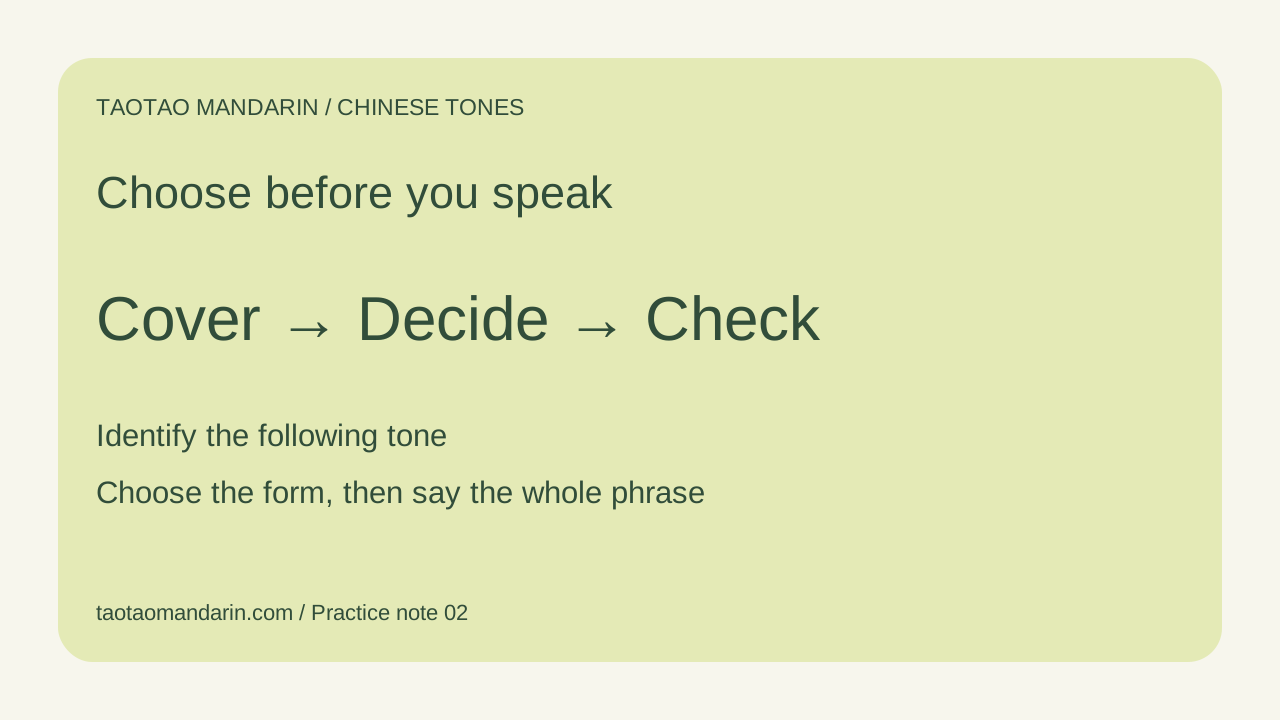
Use the rows below as a small practice set. First cover the answer key. Say which tone follows 不, choose the spoken form, and then say the whole phrase. Check the two decisions separately: recognizing the following tone and producing your chosen reading are different tasks.
This exercise is our own practice design, not a tested learning method. The examples are constructed for this worksheet and are not transcripts of real conversations.
- 不 + 听 (tīng, listen): write your reading for 不听.
- 不 + 忙 (máng, busy): write your reading for 不忙.
- 不 + 想 (xiǎng, want to): write your reading for 不想.
- 不 + 用 (yòng, use): write your reading for 不用.
- 不 + 看 (kàn, look): write your reading for 不看.
- 不 + 喝 (hē, drink): write your reading for 不喝.
Open the answer key
不听 bù tīng; 不忙 bù máng; 不想 bù xiǎng; 不用 bú yòng; 不看 bú kàn; 不喝 bù hē.
Rows with yòng and kàn call for bú because those following syllables have fourth tone. The other rows keep bù.
Bring the choice into a short reply
After checking the individual phrases, use this pair of invented situations. Cover the pinyin, say the reply, and then uncover it. These are prompts for practice, not a test score or a guarantee of correct pronunciation.
Are you buying it?
你买吗? Nǐ mǎi ma?
不买,我先看看。
Bù mǎi, wǒ xiān kànkan.
No, I will look around first.
Are you going today?
你今天去吗? Nǐ jīntiān qù ma?
不去,我明天去。
Bú qù, wǒ míngtiān qù.
No, I will go tomorrow.
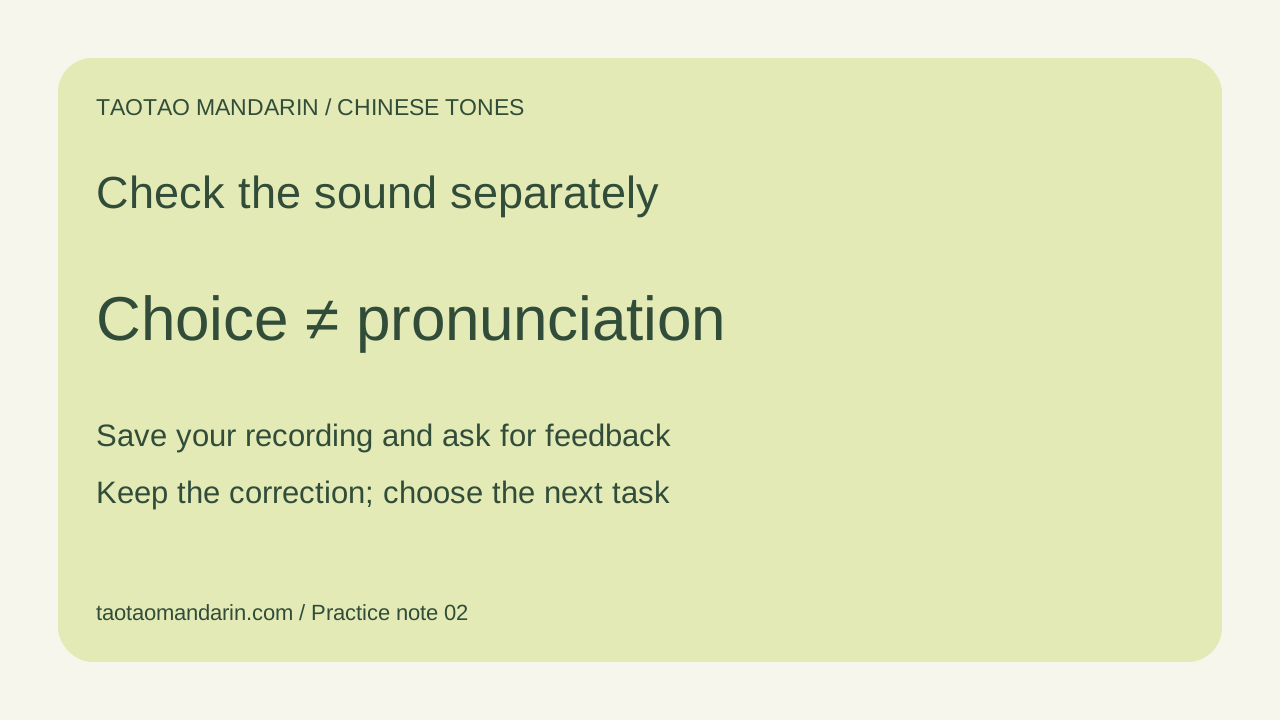
Ask a proficient speaker to check a recording if you cannot tell whether you produced the intended contour. Mark the phrase they corrected and keep the original file. Knowing the written rule alone does not verify the sound of your recording.
Keep a tiny correction log
Use the free worksheet to record a phrase, the following syllable's tone, your chosen reading, and the checked answer. Put pronunciation feedback in its own column. Leave that column empty until someone has actually listened.
If you chose the wrong written form, revisit the following tone before repeating. If the written choice was right but the recording needs work, keep the phrase short and ask for a model. Choose the next practice task from the correction you received, not from a made-up accuracy percentage.
Download the 不 practice worksheet ↓