Hear the tones.
Now bring them into speech.
Check listening, word-tone recall, repetition and sentence use separately. Keep a recording or written answer for each, get specific feedback, then choose the next practice task from the first mismatch you can verify.
Where should I start?
Choose a word you want to use and a short sentence containing it. Ask a Mandarin teacher or proficient speaker to provide a model and check your recordings. Keep that word and sentence fixed while you compare the tasks below.
When checking tones, distinguish a dictionary form from its pronunciation in connected speech. Ask your reviewer whether a difference is an expected tone change or an error.
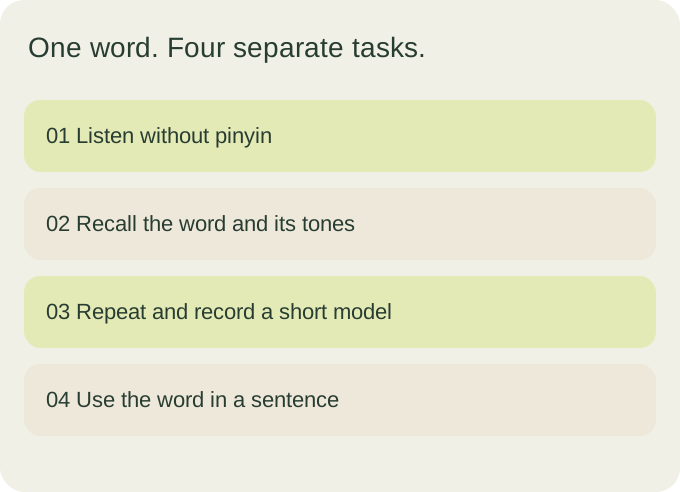
Try four separate tasks
This is our proposed practice worksheet. It organizes feedback; it is not a validated diagnostic test, and one attempt cannot establish why an error happened.
What did you hear?
Hide the pinyin. Listen to the model, write your answer, then ask the reviewer to check it. Save the audio you used.
What did you remember?
Without playing the model, recall the word's tones. Check the dictionary form separately from the sentence pronunciation.
What did you say?
Repeat the short model and record yourself. Ask the reviewer to identify a specific mismatch rather than rate your whole accent.
What changed in speech?
Use the word in your chosen sentence. Save that recording and mark the exact chunk your reviewer wants you to revisit.
Choose the next task from your notes
| Your reviewed observation | A practice task to try next |
|---|---|
| Your listening answer differs from the checked model. | Compare the model with a contrasting example supplied by your reviewer. Listen again without pinyin. |
| You recognize the model but recall the word's tones differently. | Review the checked word and its tone pattern, then try recalling it later without looking. |
| You recall the tone but your repeated recording differs. | Work on the short chunk with feedback before recording it again. |
| The short chunk matches, but your sentence attempt differs. | Mark the transition around the word and compare that part with the sentence model. |
These are suggested next actions, not diagnoses. If several tasks are difficult, record each separately rather than forcing your result into one category.
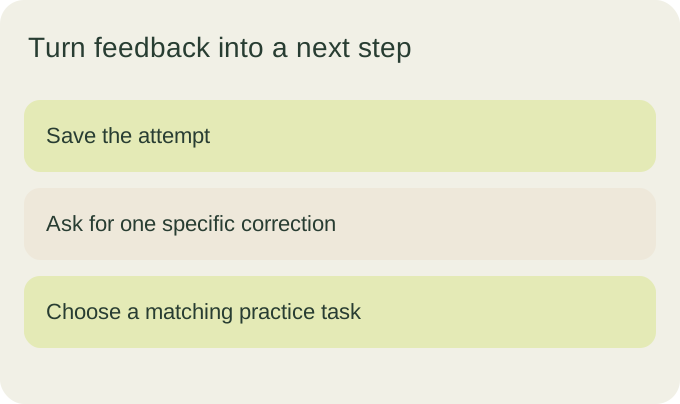
Keep a record you can actually use
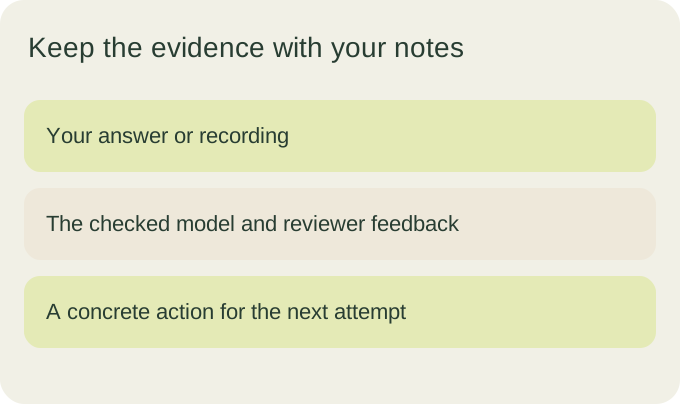
Make a row for each attempt. Record the word, sentence, task, audio filename, model reference and the reviewer's correction. Leave feedback blank until it has been checked; your own impression and someone else's correction belong in separate fields.
Use the final column to write a concrete next action: for example, ask the reviewer for a contrasting model or record the marked chunk again. Do not fill the table with invented sample scores.
Download the blank attempt log ↓Blank CSV worksheet · No sign-up · No audio is uploaded by this page
Should I only practice isolated tones?
Include words and sentences alongside isolated practice. The background practice guide linked below includes individual tones, tone pairs and imitation. This page adds a way to keep those tasks and their feedback in separate records.
How can I compare my next attempt?
Return to the same task and keep both recordings. Ask the reviewer what changed and what still needs attention. Describe the feedback you actually received; an unreviewed impression is not an accuracy score.
If you cannot check the model or understand the correction, bring the recording and your notes to a teacher. The worksheet helps prepare that conversation; it does not replace individual pronunciation feedback.
This guide is part of Practice, record & review. Return to all tone guides →