Chinese Tone Pairs Practice: Hear 2–4 vs. 4–2
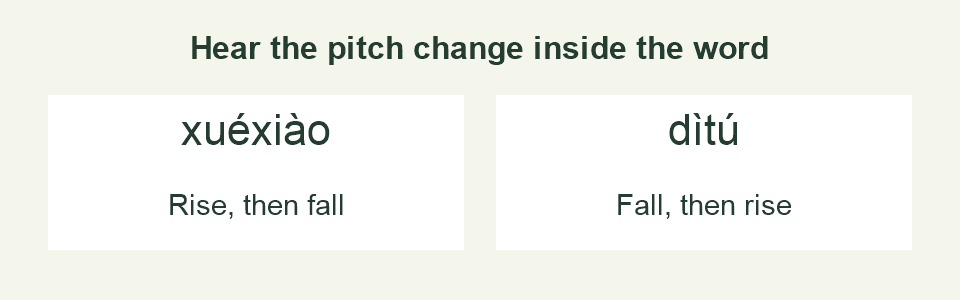
In a second–fourth pair, hear a rise and then a fall. In a fourth–second pair, hear a fall and then a rise. Compare xuéxiào (“school”) with dìtú (“map”). When one syllable goes by too fast, start with the direction you hear on the other one.
Compare two reference words
These practice clips use synthesized Mandarin. Listen to the two movements within each word, leaving both syllables connected.
Rise, then fall · xuéxiào
Fall, then rise · dìtú
Find the change in direction
Listen for the movement on each syllable. In xuéxiào, let the pitch rise through xué and fall through xiào. In dìtú, the fall on dì comes first and the rise on tú comes second. How far the voice moves depends on the speaker and the phrase. Use the reference clips to compare directions at a comfortable volume.
Ask for a campus map
Nǐ yǒu xuéxiào de dìtú ma? (“Do you have a campus map?”) has both patterns. On your first listen, notice xuéxiào. On the second, track the fall and rise of dìtú. The two words sit in the same question, so the sentence melody can make their pitch ranges sound different.
Try two blind listening clips
Write the direction before showing the answer
Play each unseen word without reading pinyin. Put an up or down arrow under each syllable. If the end of the word is all you can hear, label that syllable first. Replay the clip to fill in the missing arrow, then open the answer and compare its tone marks with your arrows.
Clip A
Reveal answer
Fùxí (“review”) is fourth–second. The first syllable falls and the second rises.
Clip B
Reveal answer
Wénhuà (“culture”) is second–fourth. The first syllable rises and the second falls.
Keep the pattern when the word moves
Say Wǒ huì fùxí (“I’ll review”) and then Wǒ huì fùxí zhè yì kè (“I’ll review this lesson”). The same tone marks belong to fùxí in both lines. Listen for a fall followed by a rise. If the longer sentence obscures the start of the word, say the word alone once, then add the surrounding words back at your regular pace.
For a partner check, write xuéxiào, dìtú, fùxí, and wénhuà on slips. Let your partner pick a word and read it aloud. Sort the slip you think they read into a rise–fall or fall–rise pile. If you heard the right word but reversed the arrows, check which syllable you treated as the first. If both syllables seemed to go the same way, return to the two reference clips and name just the second tone of each pair before trying again.
What if one tone carries over into the next?
Practice the whole word slowly enough to hear two movements. For xuéxiào, listen for where the rise on xué turns into the fall on xiào. Then say the connected word once at a natural pace and compare your recording with the model. Listen for the direction on each syllable, using your own comfortable pitch range.
Try the same method with fourteen and forty.