How to Hear the Difference Between 14 and 40 in Mandarin
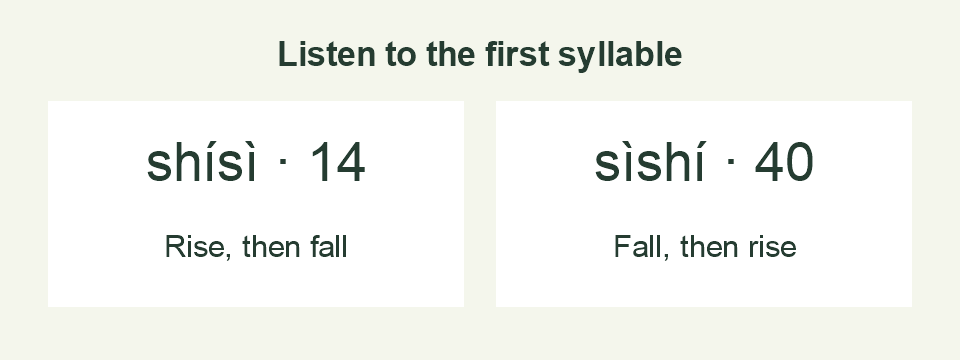
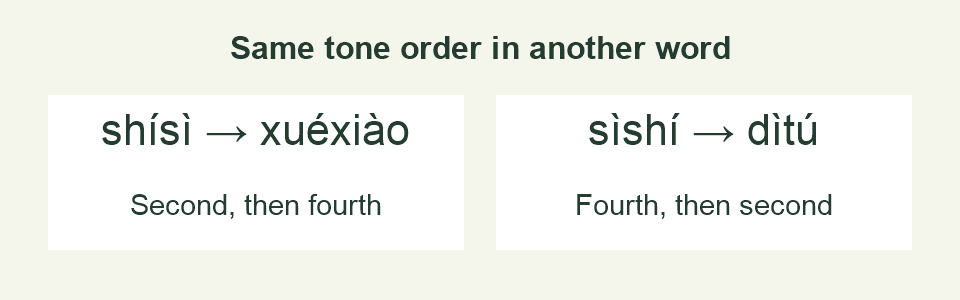
Listen to the first syllable. Shísì (14) starts with rising shí. Sìshí (40) starts with falling sì. The same two syllables appear in reverse order. At a shop, repeat the price you heard and ask duì ma? (“right?”).
Hear fourteen and forty in Chinese
These examples use synthesized Mandarin. Play each one, then listen again for the first two syllables.
14 yuan · shísì yuán
40 yuan · sìshí yuán
Compare the two prices
| Price | Pinyin | Tone order |
|---|---|---|
| 14 yuan | shísì yuán | Rise → fall |
| 40 yuan | sìshí yuán | Fall → rise |
The number comes before the unit. In these examples, yuán is the same, so focus on the two syllables before it. The initial consonant gives you a second cue: shí starts with sh, and sì starts with s.
Two clues when the numbers sound alike
In shísì, ten comes first and four is added. In sìshí, four tells you how many tens. If you hear shí clearly but are unsure what you heard before or after it, replay or ask for the amount again and listen for where shí occurs. Its position tells you which number you have.
Use the first consonant and the tone together. In a careful model, shí begins with sh and rises, while sì begins with s and falls. In conversation, the pitch may move less dramatically than it does in a slow example. If the first syllable went by too fast, listen for the second: a final sì points to 14, and a final shí points to 40.
Confirm the amount at the counter
- Seller · Yígòng sìshí yuán. (Forty yuan total.)
- Customer · Sìshí yuán, duì ma? (Forty yuan, right?)
- Seller · Duì, sìshí yuán. (Yes, forty yuan.)
Try a price check with a partner
Listen before looking at the digits
Write 14 and 40 on separate slips. Ask a Mandarin-speaking partner to pick one without showing you and read the price ending in yuán. Point to the number you heard. On the next turn, name the first syllable you heard before you point. Keep the unit the same so the number is the only clue.
If you mix up a price, ask for the same amount once more. Listen for whether the first syllable rises or falls. Then check the first consonant too. A first syllable that sounds like shí points to 14 in this exercise. A first syllable that sounds like sì points to 40.
Read the price back before paying
Imagine the price is 40. Ask Sìshí yuán, duì ma? (“Forty yuan, right?”). If the seller repeats 14 instead, say Shísì yuán, duì ma? and wait for confirmation. Switch roles and try the same routine with quantities. Replace yuán with ge for a simple count of items.
Test yourself without looking at the numbers
For each clip, decide whether you heard 14 or 40. Then say the amount back before opening the answer.
Clip 1
Check the answer
40 · Yígòng sìshí yuán. The first number syllable is falling sì.
Clip 2
Check the answer
14 · Yígòng shísì yuán. The first number syllable is rising shí.
Clip 3
Check the answer
40 · Sìshí ge. The unit changed to a counter, but the number still begins with sì.
What if I only hear part of the price?
Ask the seller to repeat the amount, then say the full price you heard. For example, Shísì yuán, duì ma? checks whether the price is fourteen yuan. Wait for confirmation before paying.