How to Say Two Fourth Tones in a Row in Mandarin
In a close pair such as zàijiàn, give the first fourth tone a shallower fall, then start the second syllable higher and let it fall farther. Both syllables keep their fourth-tone marks in pinyin.
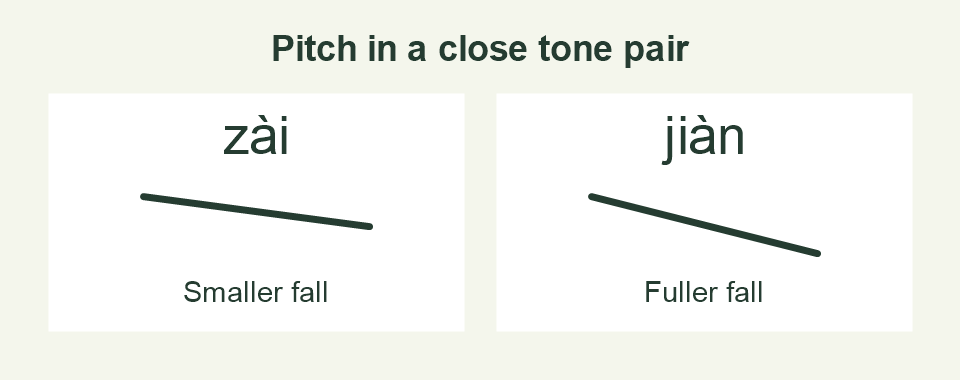
Hear where the second fall begins
| Syllable | What to listen for |
|---|---|
| zài | A fall that stops short of the low end. |
| jiàn | A fresh start above the end of zài, then a deeper fall. |
The size of the falls varies in connected speech. Use this pattern as a practice model for a close pair. Warm up with a fourth tone at normal speaking volume.
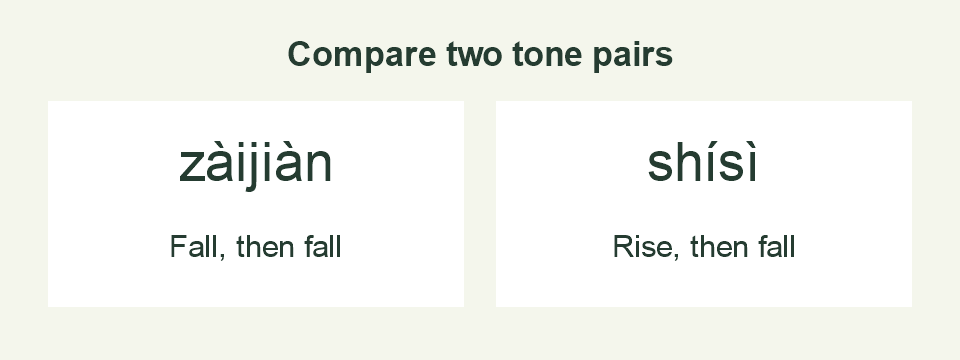
Practice and listen back
Try a goodbye with and without a pause
Imagine you are leaving a shop. Say zài, pause, and say jiàn. This gives you two isolated falls for comparison. Next say zàijiàn as one goodbye. Let the first fall stop before the bottom of your range, then let the second syllable finish its fall.
Record both versions and listen to the join. Can you hear the second syllable start above the end of the first? If the whole word sounds like one long slide, exaggerate that small restart once. Then repeat the goodbye with a smaller movement and keep the syllables connected.
Try the pattern in another word
Say xiànzài (“now”) and diànhuà (“telephone”). Choose one word and use it in a short reply you already know. Listen for a downward movement on both syllables. If the first fall disappears, repeat the word alone and try the reply again at a comfortable pace.
Does the first fourth tone become a second tone?
In zàijiàn, the first syllable remains a falling fourth tone, with a smaller fall in the practice pattern. The pitch lifts at the start of jiàn. Keep both fourth-tone marks.